
10 Filipino Children’s Books to Celebrate Filipino American History Month
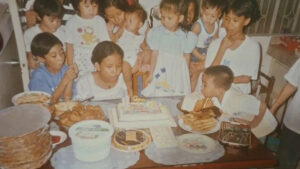
A typical Filipino birthday in the 1990s, Pasig City (Photo courtesy of Elena Baldwin)
October is Filipino American History Month.
I love that there is a month for remembering Filipino American stories, but I also think about what children take from those stories. Not just the names and dates. The feeling of them.
The feeling of family arriving with food. Of lola (grandmother) telling the same story again. Of hearing a word from home and knowing exactly what it means, even when you cannot translate it neatly.
When I was growing up in the Philippines, culture was simply around me. It was in the food, the noise, the neighbours, the cousins, the parties that became much bigger than planned.
My children are growing up in Britain. Their childhood is different. Not better or worse. Just different.
So I have gathered ten Filipino children’s books that can help open small, gentle conversations about Filipino heritage, family, language, food and Filipino American life. They are suitable for children around four to eight, although some may be better suited to older or younger children within that range.
These are multicultural children’s books for bedtime, classrooms and those quiet moments when someone asks, “Mummy, what was it like when you were little?”
1. Our Nipa Hut: A Story in the Philippines by Rachell Abalos, illustrated by Gabriela Larios
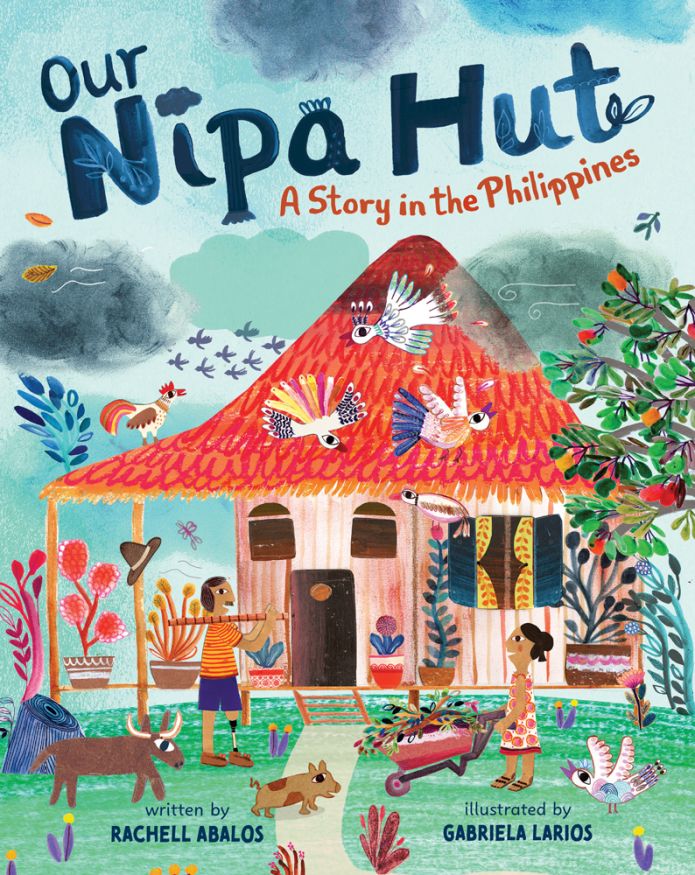
This is a lovely story about Yelena, her papa and their traditional nipa hut. When a tropical storm approaches, the family must prepare together.
I like that the nipa hut feels like more than a building. It is part of the family. Something cared for, protected and lived in.
The story introduces children to traditional Filipino architecture while also touching on storms, resilience and family teamwork. It is listed for ages four to eight.
It made me think about the houses I remember from the Philippines. The sounds around them. The way a home can hold so many memories.
2. When Lola Visits by Michelle Sterling, illustrated by Aaron Asis

This one feels very close to my heart.
A young girl’s summer does not really begin until her lola arrives from the Philippines. There is mango jam, Tagalog singing, family cooking and the ordinary happiness of being together.
Then summer ends. Lola goes home.
That part always gets me. The sweetness and the sadness sitting beside each other. Anyone who has waved goodbye at an airport may understand.
It is one of those diverse picture books for kids that speaks quietly about family separation, memory and love across oceans. Children may simply enjoy the story. Adults may need a tissue.
3. Lolo’s Sari-Sari Store by Sophia N. Lee, illustrated by Christine Almeda

A sari-sari store is not just a shop. It can be a meeting place, a source of news and a little centre of the community.
In this story, a girl remembers helping her lolo run his store in the Philippines. She misses him and the people around the shop when she moves away. But she carries his lessons about community into her new home.
“Sari-sari” means a good variety. The phrase suits the story too. There are memories, family, distance, kindness and the small ways people look after one another.
This would be a beautiful choice for a five-year-old who is curious about family life in the Philippines.
4. Sari-Sari Summers by Lynnor Bontigao
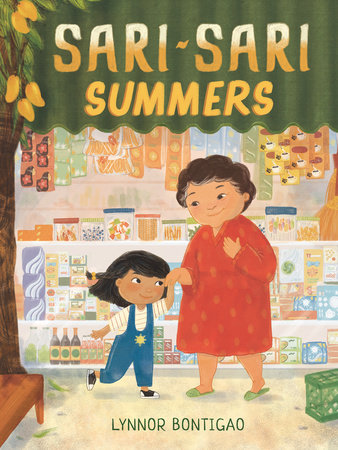
Nora spends her summers with Lola at a sari-sari store. When a heat wave leaves the shop empty, Nora comes up with a delicious idea involving ripe mangoes.
There is food. There is ingenuity. There is a grandmother and granddaughter working side by side.
And, thankfully, there is a recipe for mango ice candy too. Reading is important, but a little tasting is never a bad idea.
This book captures the warmth of Filipino family life without making everything feel like a lesson. It is about helping, creating and finding a way forward together.
Very Filipino, in the most comforting way.
5. A Roof! by Stephanie Ellen Sy, illustrated by Daniel Tingcungco
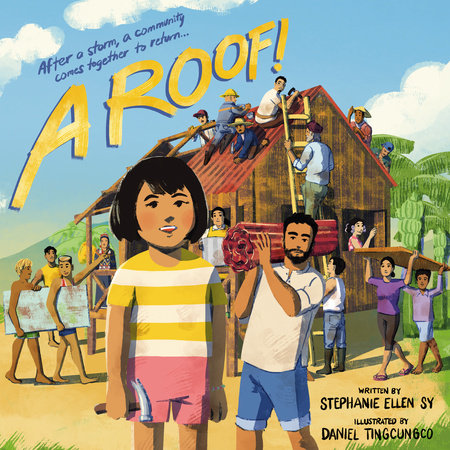
After a typhoon, Maya finds a roof in her backyard. There is an address written on it, so she decides to return it to its family.
She cannot do it alone. Along the way, farmers, fishers, a sapatero (shoemaker), a labandera (laundress), a kusinera (cook) and other neighbours help her.
This is a joyful introduction to bayanihan, the Filipino spirit of people coming together to help one another.
I remember that feeling of community from my own childhood. Somebody was always around. Somebody always had a spare plate, a bit of advice or a way to help. Sometimes whether you had asked for it or not. Naku (oh dear).
6. Riding Through Rice Fields by Michelle Sterling, illustrated by Bianca Austria
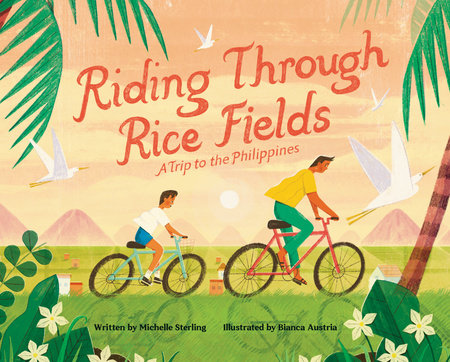
Mateo and his dad travel to the Philippines for a family reunion. They cycle through rice fields, swim in rivers and discover parts of the father’s childhood that Mateo has never seen.
It is a story about returning home. But also about getting to know a parent in a new way.
The idea of bayanihan appears here too. The book shows how small contributions can become something powerful when people work together.
I found myself thinking about my own children visiting the Philippines. They see cousins, food and sunshine. I see the places and people that helped make me who I am. We are looking at the same thing, but perhaps carrying different memories.
7. Lakas and the Manilatown Fish by Anthony D. Robles, illustrated by Carl Angel
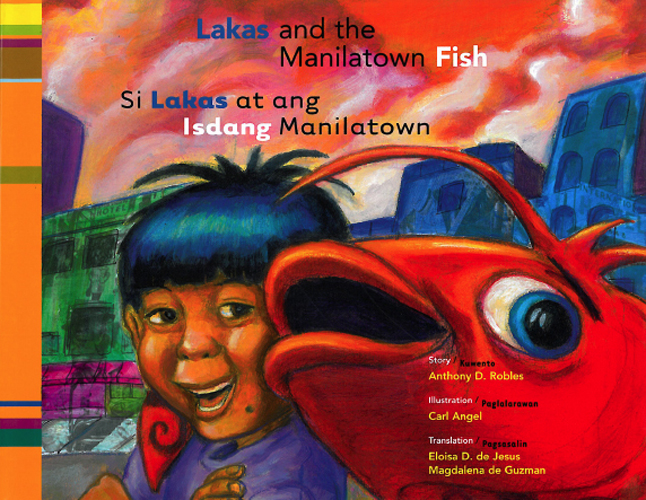
This bilingual English–Tagalog story takes place in San Francisco’s Manilatown.
Lakas meets Filipino elders known as manongs and a very unusual fish. The fish escapes, and soon everyone is chasing it through the neighbourhood and towards San Francisco Bay.
It is funny, lively and imaginative. It also gives children a glimpse of Filipino American community history.
I love that it does not feel like a history lesson. It is an adventure first. The history sits inside it. The streets, the elders, the language and the memories are simply part of the world Lakas lives in.
Sometimes that is the best way for children to learn. Through a good story and a slightly ridiculous fish.
8. Filipino Friends by Liana Romulo, illustrated by Corazon Dandan-Albano
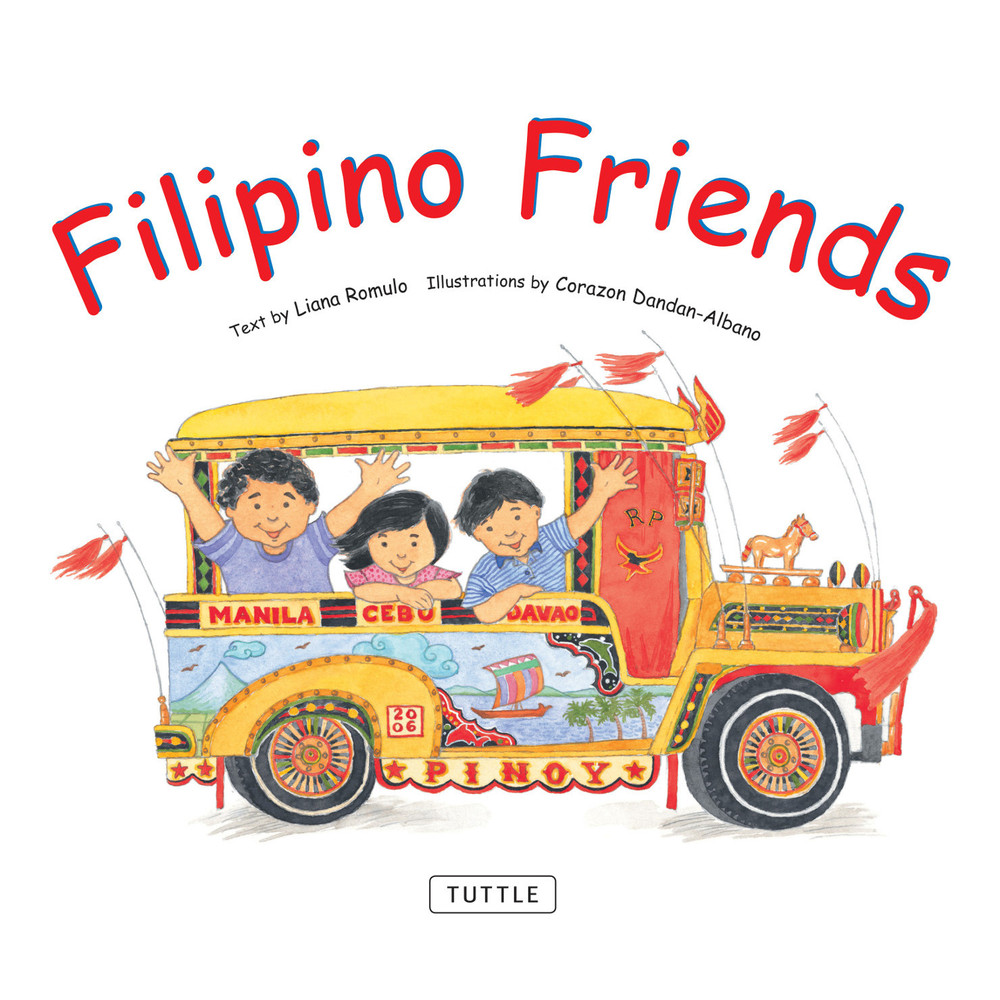
This book follows a Filipino American boy visiting the Philippines for the first time.
The illustrations label everyday objects in English and Filipino. Children can explore food, clothes, games, celebrations and family life while noticing what feels familiar and what feels different.
It is a helpful book for heritage-language learning, especially in homes where English has become the main language.
That is our reality too. We use Filipino words, but English often wins. It is quicker. Easier. Sometimes everyone is tired and nobody wants dinner to become a language class.
Still, words like lambing (affection) and naku carry a feeling with them. Books like this give children somewhere to meet those words.
9. Filipino Celebrations: A Treasury of Feasts and Festivals by Liana Romulo, illustrated by Corazon Dandan-Albano
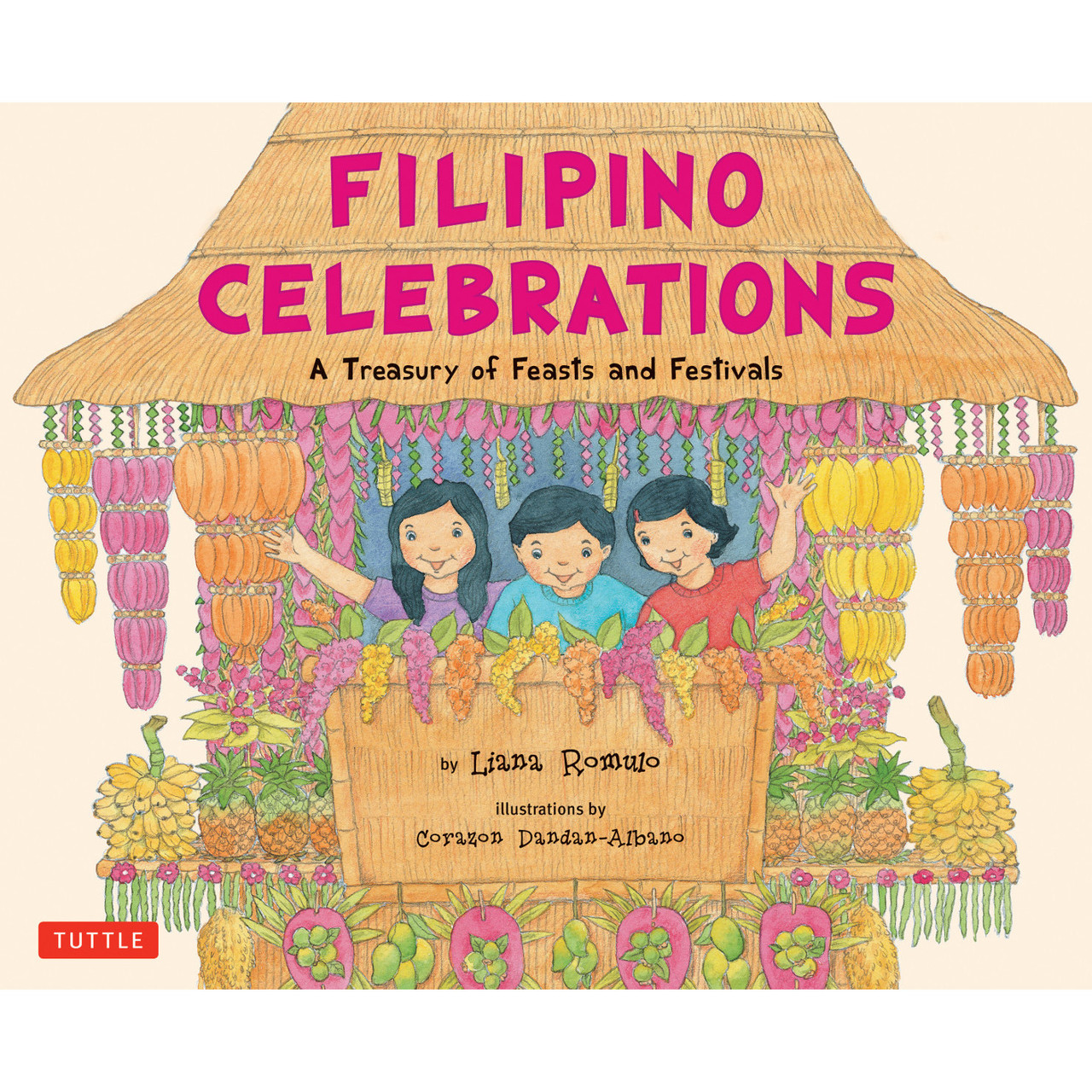
This is a more informational book about Filipino celebrations, holidays, family gatherings, food, customs and festivals.
It would work well in a classroom or as a book to dip into together. Children can learn about Christmas, weddings, birthdays and different regional traditions across the Philippines.
I appreciate that it shows there is no single Filipino experience. The Philippines has many languages, regions and customs. Even within one family, traditions can look different.
That matters for children growing up away from the Philippines. Heritage does not have to be one neat package. It can be a collection of places, recipes, words and stories.
A bit messy. Very real.
10. Sam & Sophie at the Festival from Mango and Marmalade Stories
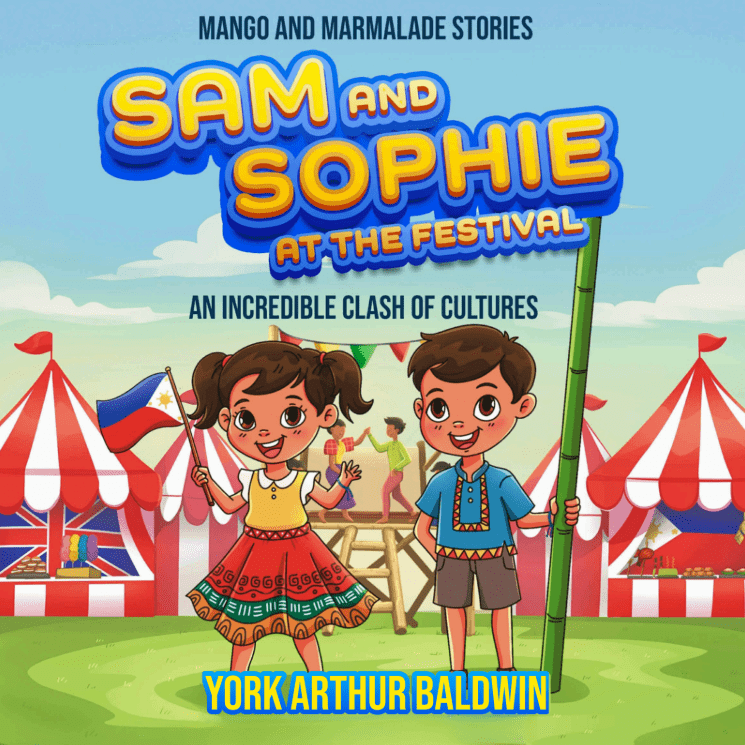

I cannot finish this list without mentioning Sam and Sophie.
They are British-Filipino twins. They have a Filipino mum, a British dad and a lola who makes chicken adobo. Their family life includes lumpia, bibingka, Filipino dancing, afternoon tea and cricket.
In Sam & Sophie at the Festival, the twins experience both sides of their heritage in one everyday family adventure.
That was always important to me. I did not want culture to appear only during a special lesson or an important celebration. I wanted it to be ordinary. Part of the noise and fun of family life.
Sam and Sophie can be proud of being British and Filipino. They do not have to choose.
Mango and Marmalade Stories is the independent children’s publishing brand I founded from that feeling. The books began at home, with my own children, during a time when I was trying to hold on to family, culture and a sense of myself.


Our books are made for families in the UK, the US and the Philippines.
The simplest way to buy is directly from us at Mango and Marmalade Stories. That is where you can find the whole Sam and Sophie series, in print, ebook and audiobook.
For readers in the Philippines, our books are published there by 8Letters Publishing, and you can also shop our books on Lazada.
The books were also part of the Manila International Book Fair in September 2026. That has felt very special. Stories that began quietly at home have travelled back to the Philippines.
More Sam and Sophie stories to explore
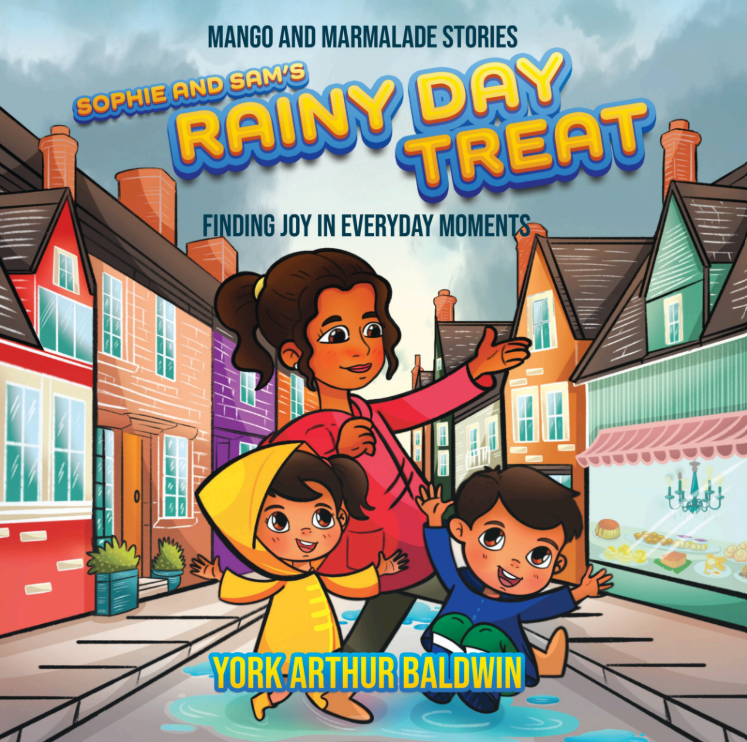
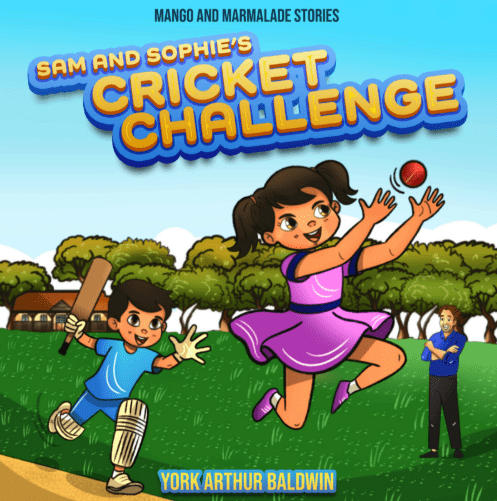
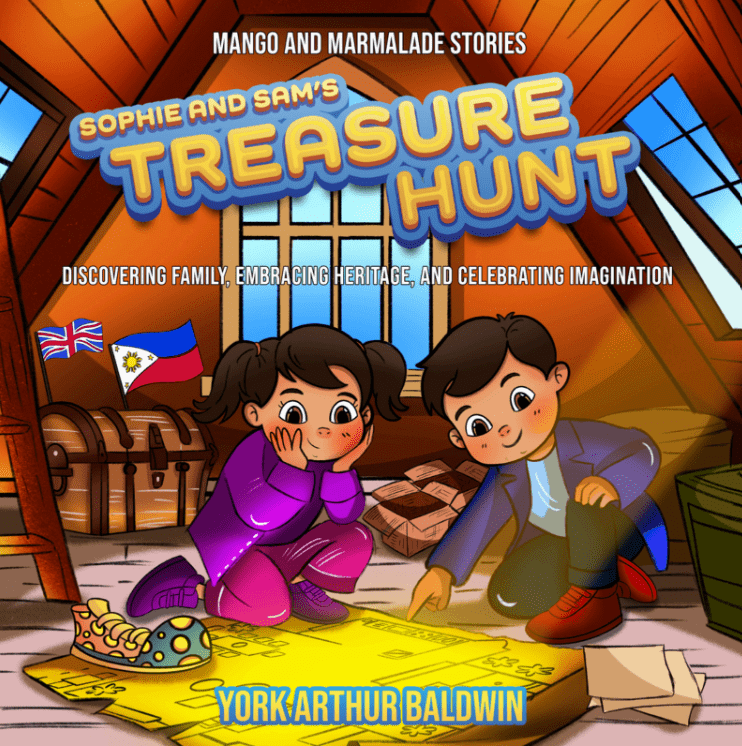
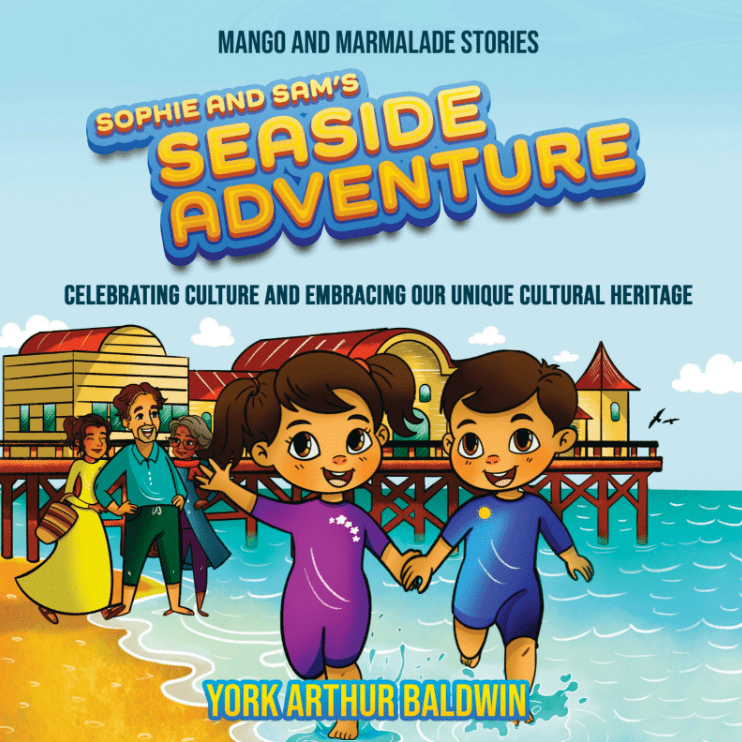
You can see all five at the Mango and Marmalade Stories website.
A small reading list can hold a lot
Filipino American History Month can be a time to talk about history. It can also be a time to notice the small things children already know.
A favourite dish. A family nickname. A word from a grandparent. The way everyone gathers around a table and somehow makes room for one more person.
What will our children remember?
I do not know if my children will have the same childhood I had. They will not grow up surrounded by twenty cousins every weekend. They will not hear karaoke drifting through the neighbourhood in quite the same way.
But perhaps they will carry something else.
A story about a lola. A recipe involving mangoes. A book about a sari-sari store. A memory of reading beside me while rain tapped against the window.
Maybe that is enough to begin with.
For more stories about Sam and Sophie and their British-Filipino family, you can visit the Mango and Marmalade Stories books.